
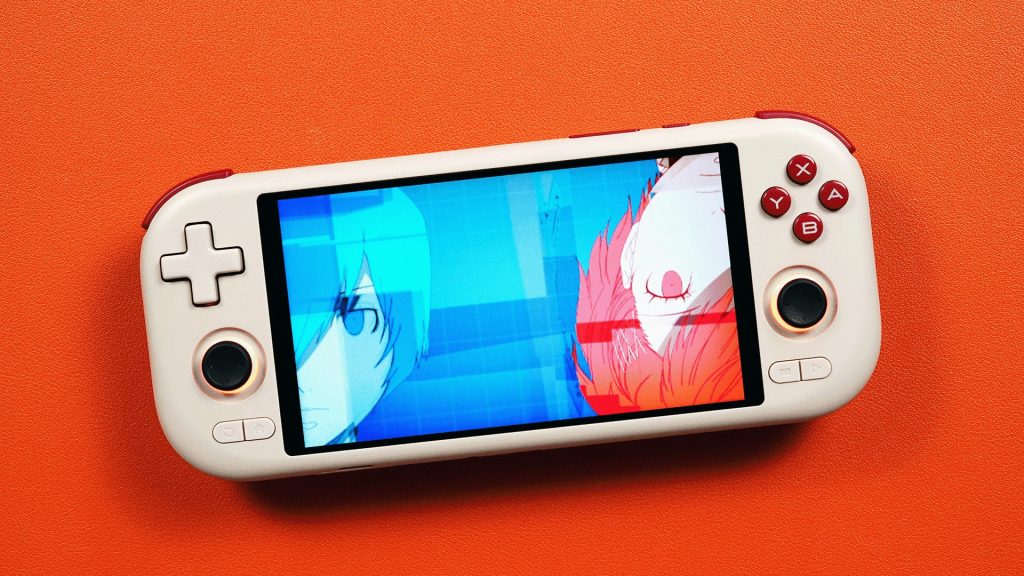
The handheld emulation market has hit a fascinating, yet exhausting crossroads. In the relentless pursuit of raw processing power, manufacturers have entered a frantic arms race to pack desktop-class chips, massive dual-fan cooling arrays, and giant multi-cell batteries into portable form factors. The result? “Handhelds” that weigh over half a kilogram, requiring dedicated carrying cases and demanding a physical endurance test from your wrists. The core philosophy of portable gaming—the freedom to slide a device out of your pocket and escape into a game anywhere, anytime—has been buried under sheer physical mass.
The Mangmi Air arrives as a radical, beautifully executed counter-movement. Stripping away the unnecessary structural bloat of the modern handheld industry, the Air commits entirely to an aggressive minimalist blueprint. It isn’t trying to emulate modern home consoles or run intensive AAA PC games. Instead, it aims to be the absolute ultimate everyday carry (EDC) time machine for retro purists. This is a device where premium ergonomics are measured not by features, but by what was deliberately left out to save weight.
The Featherweight Paradigm: Radical Wrist Relief
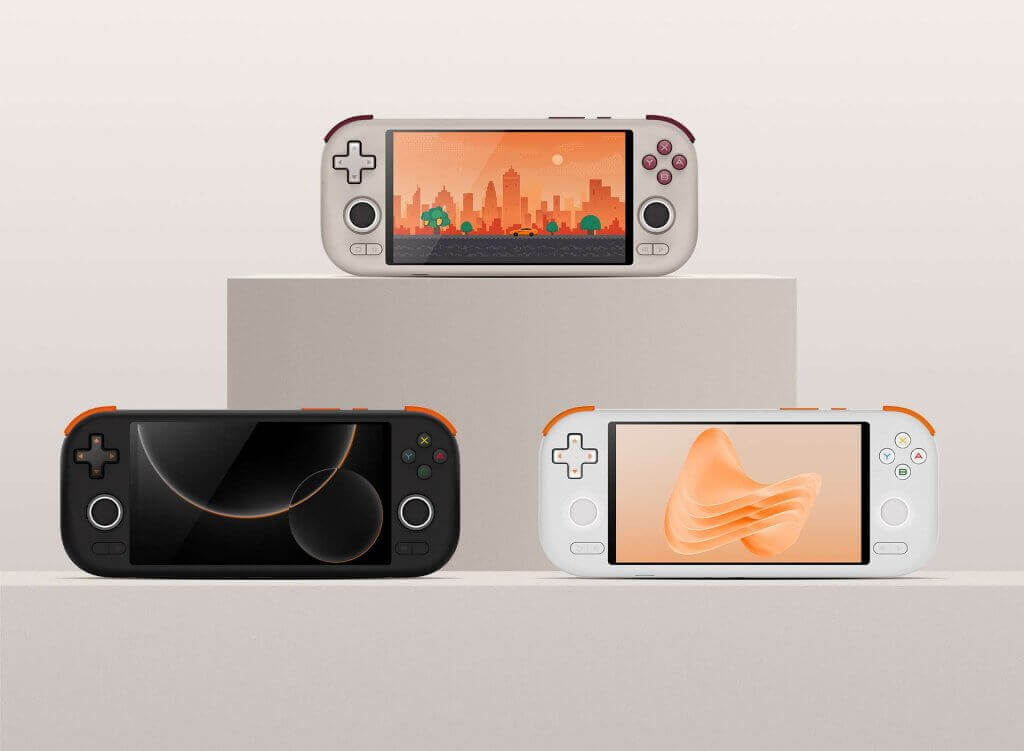
When assessing any portable gaming device, the spec sheet usually screams about CPU clock speeds or RAM capacities. For the Mangmi Air, the most revolutionary metric is a physical one: its weight. Tipping the scales at an unbelievable 128 grams, the Air is significantly lighter than the average modern smartphone, and it represents a mere fraction of the weight of heavy hitters like the Steam Deck or even mid-range landscape devices.
In real-world usage, this dramatic weight reduction fundamentally changes how, where, and for how long you can play. On a standard retro handheld weighing upwards of 250 grams, a subtle but continuous mechanical strain is placed on your wrists. Your forearms must constantly balance the shifting center of gravity, especially during fast-paced action sequences or platformers. After an hour or two, this structural tension manifests as creeping finger numbness, localized wrist fatigue, or a dull ache in the palms.
The Mangmi Air completely eradicates this structural friction. Holding the device feels almost ghost-like; the physical pull on your muscles and tendons is virtually non-existent.
- The Overhead Play Scenario: You can lie completely flat on your back in bed, holding the device directly above your face, without the terrifying anxiety of dropping a heavy brick onto your nose. Even with your arms raised at an angle, your shoulders and elbows experience no fatigue.
- The Daily Commute: Standing on a packed subway car or a swaying public bus usually requires one hand on a safety rail. Because the Air is so light, you can comfortably grip, hold, and play precision-heavy platformers with one hand, or balance it effortlessly between your fingertips without fearing that a sudden bump will cause the device to slip.
By prioritizing a sub-130g footprint, Mangmi has created a handheld that blends seamlessly into the background of your daily routine. It is a device built for marathon gaming sessions that leave your hands feeling just as fresh as when you first booted it up.
Shell Architecture: Evaluating the Premium Anodized Aluminum
When a tech product labels itself as “Air” or “Featherweight,” experienced hardware enthusiasts immediately prepare themselves for a major compromise in build quality. The market is flooded with ultra-light devices that achieve their low weight by utilizing paper-thin, hollow, and flexible plastic shells that creak under the slightest twisting pressure.
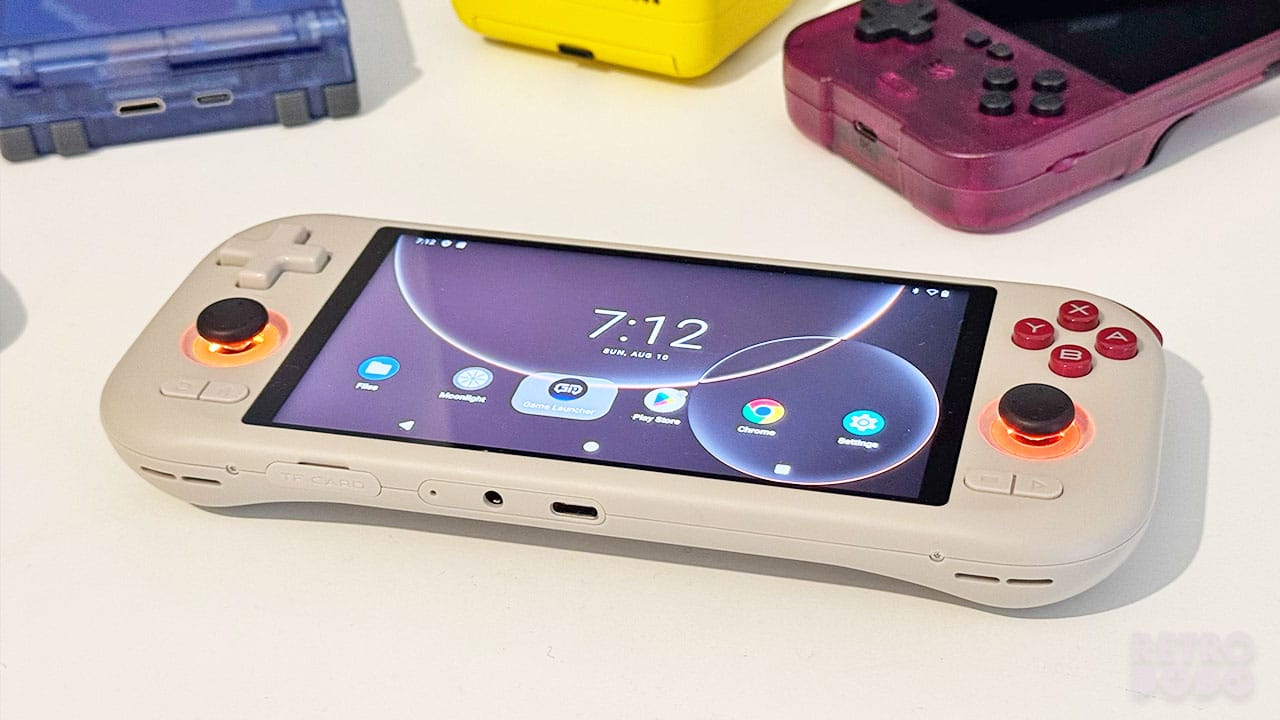
Mangmi resisted this cheap shortcut, opting instead for a highly engineered CNC-machined Aerospace-Grade Aluminum Unibody shell.
The execution here is a masterclass in modern metallurgical engineering. To keep the weight at 128 grams while retaining the structural dominance of solid metal, Mangmi’s engineers systematically shaved down the interior walls of the aluminum shell, leaving reinforced structural ribs only along critical impact stress points.
- Rigidity and Flex: The result is a chassis that feels like a solid billet of metal. When subjecting the Air to an intentional twist or localized squeeze test, there is absolutely zero structural flex, zero shifting of the seams, and a complete absence of cheap plastic groans. It feels profoundly rugged and expensive.
- Surface Texture: The exterior surface undergoes a meticulous bead-blasting treatment before receiving a deep anodized finish. It yields a smooth, premium, ultra-matte texture that feels distinctly cool to the touch when first picked up. Furthermore, this specific treatment acts as a highly effective barrier against hand sweat, skin oils, and unsightly fingerprint smudges.
- The Tactile Interface: Nestled directly into the precision-milled aluminum cutouts are low-profile dome-switch face buttons and a strictly calibrated d-pad. Because the housing is solid metal, the buttons suffer from zero housing wobble. Every input delivers a crisp, mechanical, and highly deliberate click that provides instant tactile validation to your thumbs.
The Display: Miniature Footprint, Microscopic Sharpness
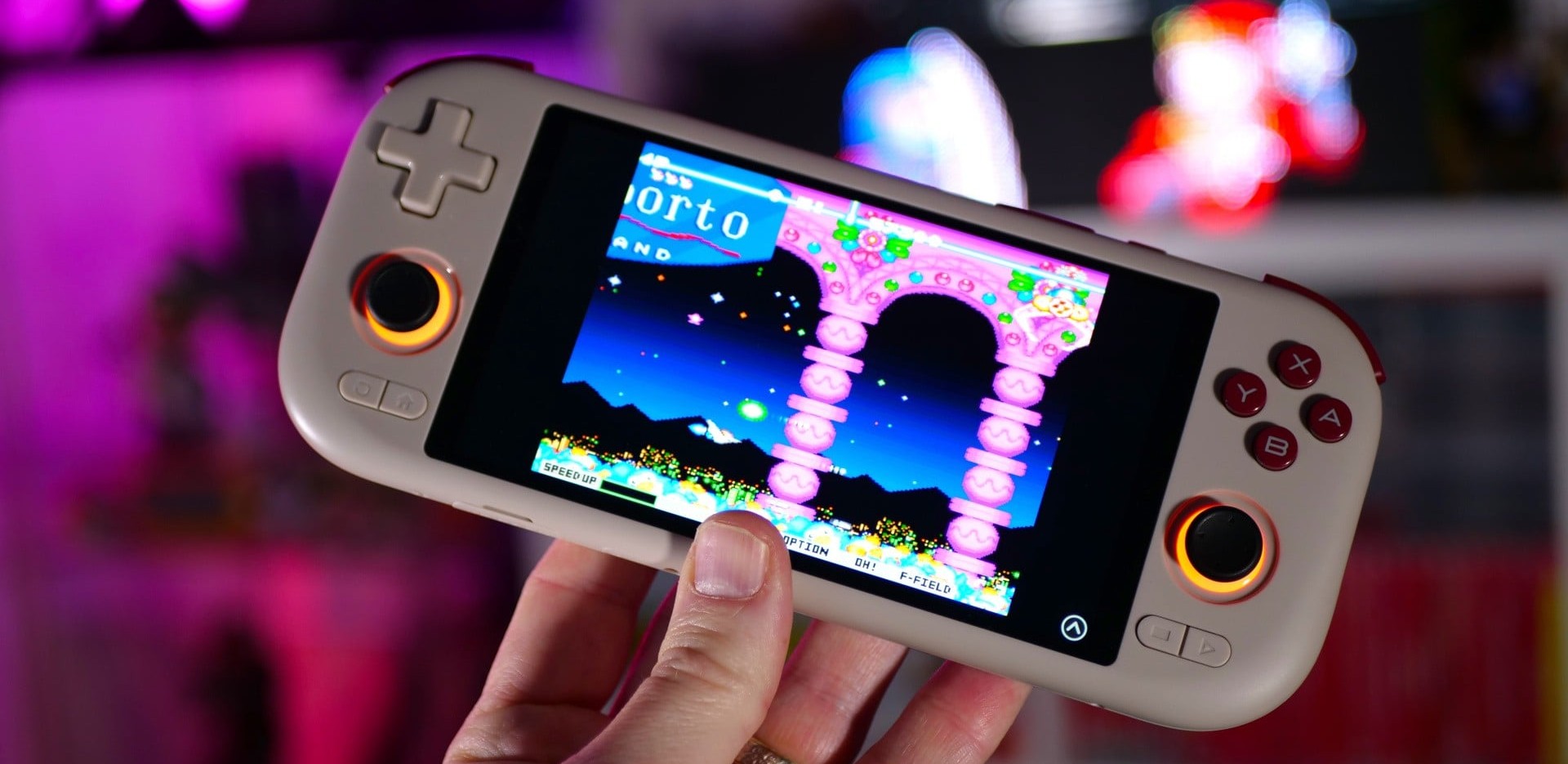
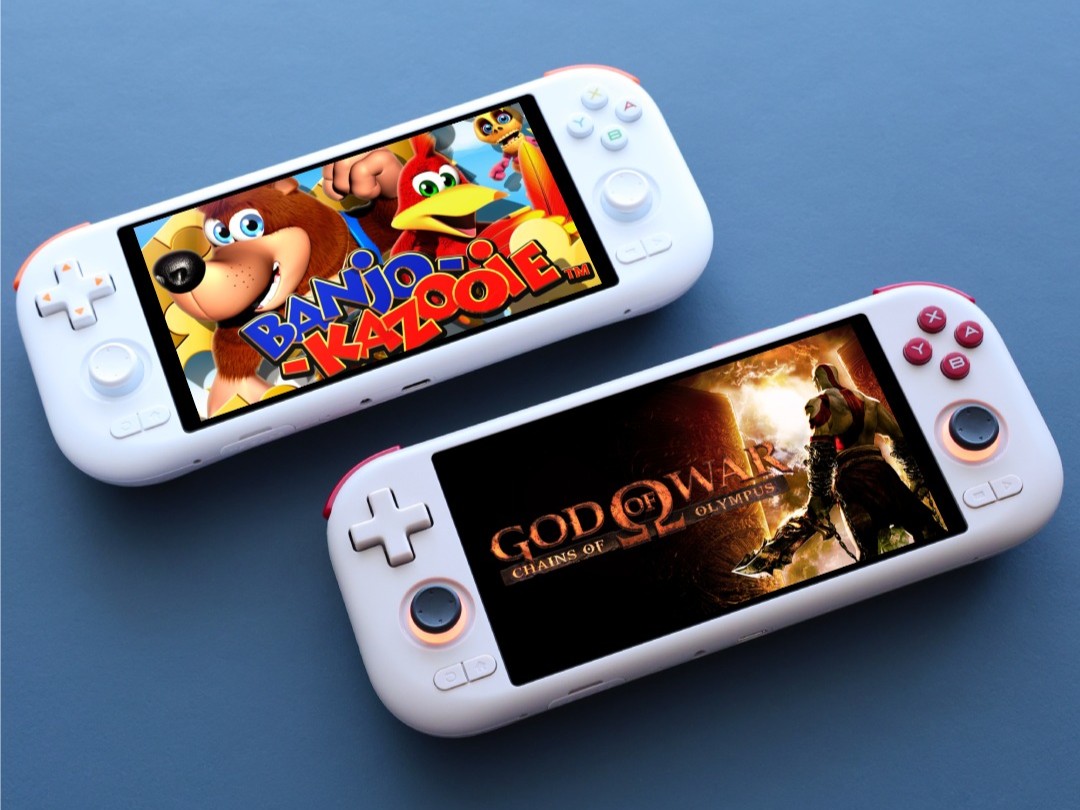
To maintain its hyper-portable, featherweight posture, the Mangmi Air implements a compact 3.2-inch display. In a world accustomed to massive 6 or 7-inch smartphone screens, a 3.2-inch panel might sound like an ergonomic step backward. However, once you fire up a game, any concerns about size are instantly washed away by the sheer, unadulterated sharpness of the screen.
Mangmi deployed a fully laminated, high-density IPS panel featuring a native 960×720 resolution. When you pack that many pixels into a compact 3.2-inch canvas, you achieve a staggering pixel density of roughly 375 PPI (Pixels Per Inch).
- Visual Benchmark: The Mangmi Air boasts a higher pixel density than a standard Retina display, making it physically impossible for the human eye to distinguish individual pixels at a normal gaming distance.
This dense pixel arrangement yields distinct advantages for retro emulation
- Flawless 4:3 Aspect Ratio: The screen is built in a native 4:3 format, which is the exact geometric blueprint used by classic home consoles and arcade cabinets. There is no ugly black letterboxing or stretched, distorted character sprites.
- Crisp Text Rendering: In dense, text-heavy retro JRPGs like Final Fantasy VI or Chrono Trigger, the font scaling is breathtakingly clear. Even the tiniest kanji or micro-subtitles remain completely legible without causing sub-pixel blurring or eye strain.
- Advanced Shader Performance: Because you have a massive surplus of pixels, the screen can accurately handle complex retro filters like CRT scanlines or Game Boy dot-matrix grid shaders without introducing weird shimmering or uneven scaling artifacts.
- Zero Air Gap Display: The display glass is completely fused to the underlying IPS layer via advanced optically clear adhesive (OCA) lamination. This eliminates internal light refraction, pushing the graphics right up against the surface of the glass, delivering vibrant color saturation, deep contrast levels, and wide, uncompromised viewing angles even under direct outdoor sunlight.
The Battery Dilemma: Real-World Performance of an Ultra-Thin Cell
The fundamental law of hardware physics dictates that batteries are inherently heavy, dense, and thick. To design an “Air” handheld, you must make a hard compromise regarding battery capacity. You cannot physically fit a massive 4000mAh cell inside a 128-gram metal chassis without ruining the slim profile.
To solve this, Mangmi integrated a specialized, hyper-thin 2100mAh lithium-polymer flat cell. To maximize the efficiency of this modest capacity, the Air relies on an ultra-lean custom Linux operating system that strips away all background processes, cellular standby scripts, and heavy OS bloat.
Real-World Uptime Benchmark Breakdown
The performance of this razor-thin battery is surprisingly resilient, scaling dynamically based on the computational workload of the system:
| Emulated Platform | System Load Profile | Average Battery Endurance | Optimal Operating Settings |
| 8-Bit/16-Bit (NES, GBA, Genesis) | Low / Minimal | 5.5 to 6.5 Hours | 50% Display Brightness, Mono Speaker |
| PlayStation 1 (PS1) | Balanced / Moderate | 4.5 to 5.0 Hours | 50% Display Brightness, Audio Jack |
| Sony PSP & Dreamcast | Peak / Maximum | 2.5 to 3.5 Hours | 40% Display Brightness, No Shaders |
Thermal Efficiency & Fanless Silence
Because the internal chip is optimized for high power efficiency per watt, the Mangmi Air does not require an active internal cooling fan. The entire device operates in dead-drop, absolute silence.
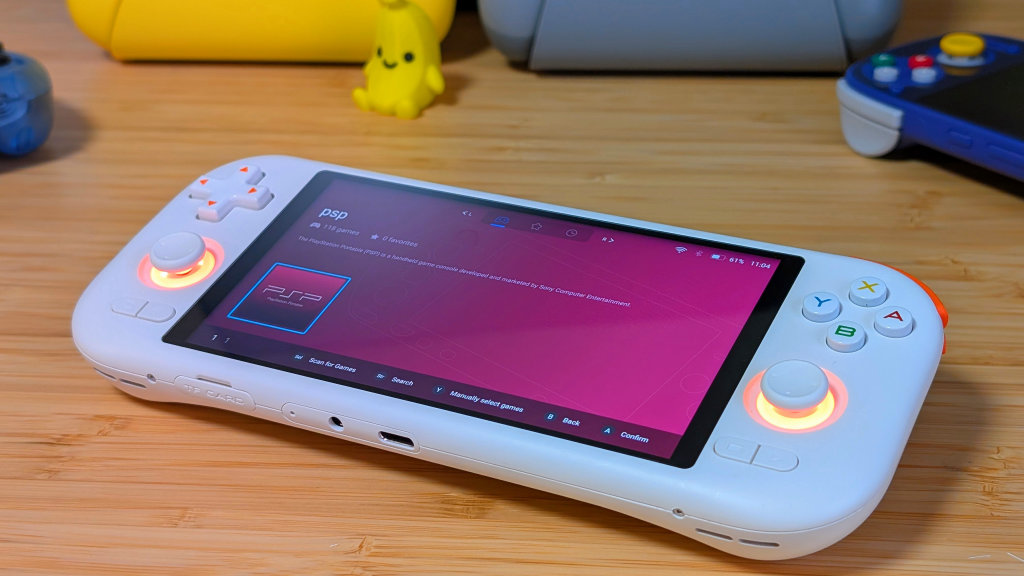
The premium CNC aluminum shell pulls double duty as a massive passive heatsink. During prolonged, intensive sessions of 3D emulation (like running complex PSP fighting titles), the metal unibody will naturally pull heat away from the processor. The back of the shell gets noticeably warm to the touch, but it stabilizes comfortably below the threshold of sweat-inducing or uncomfortable temperatures, ensuring the interior hardware remains well-preserved over years of deployment.
Emulation Capability Matrix
While the Mangmi Air feels like an elite piece of jewel-like tech, it packs a serious computational punch for its size, handling everything up to the 5th generation of home consoles with absolute authority.
- The 2D Classics (GBA, SNES, Genesis): Run with an unyielding lock at 60/60 FPS. Thanks to the high-density screen, pixel-art games look better here than they ever did on original hardware.
- PlayStation 1 (PS1): The entire library runs at full speed without breaking a sweat. Complex 3D titles like Metal Gear Solid or Gran Turismo 2 render perfectly, with zero audio stuttering or frame-pacing inconsistencies.
- The 3D Frontier (PSP/Dreamcast): Light-to-medium difficulty titles run wonderfully at native resolution. While you won’t be upscaling heavy titles to 4x resolution, the 3.2-inch screen ensures that native rendering looks remarkably smooth and cohesive.
Conclusion: The King of Minimalism
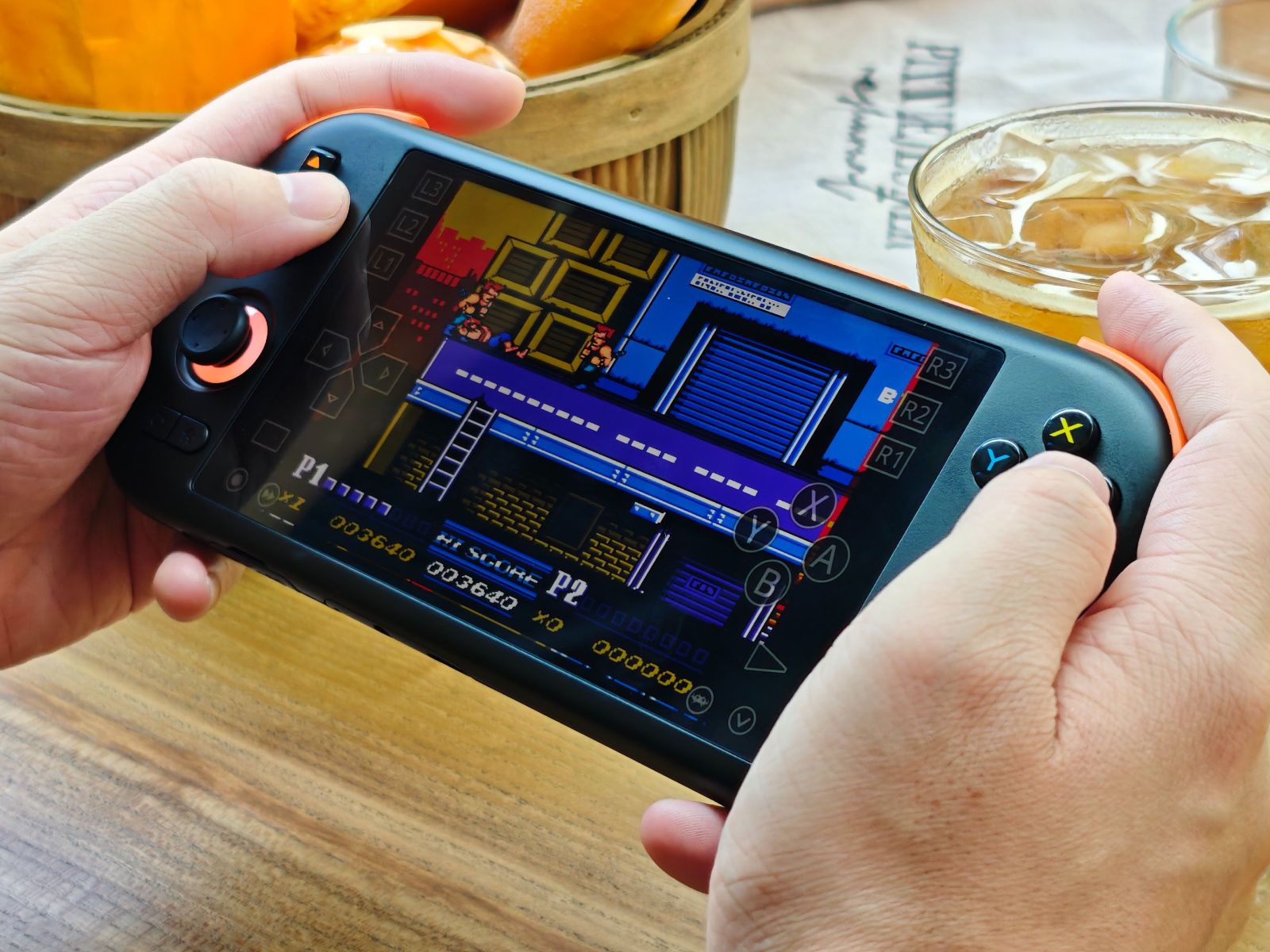
The Mangmi Air is a highly specialized piece of hardware that understands exactly what it wants to be. It is not an all-in-one powerhouse designed to sit on your couch and emulate heavy modern systems. Instead, it is a beautifully focused, unapologetic celebration of radical portability and physical comfort.
By combining an elite, rigid CNC aluminum unibody shell with an impossibly sharp 375 PPI display and keeping the physical footprint at a mere 128 grams, Mangmi has delivered the ultimate antidote to wrist fatigue. It is a premium, silent, self-contained time machine that slides into your pocket entirely unnoticed, ready to instantly transport you back to your childhood during the brief, quiet moments of your day. If you value physical ergonomics, tactile material excellence, and flawless classic emulation, the Mangmi Air stands completely alone in its class.