
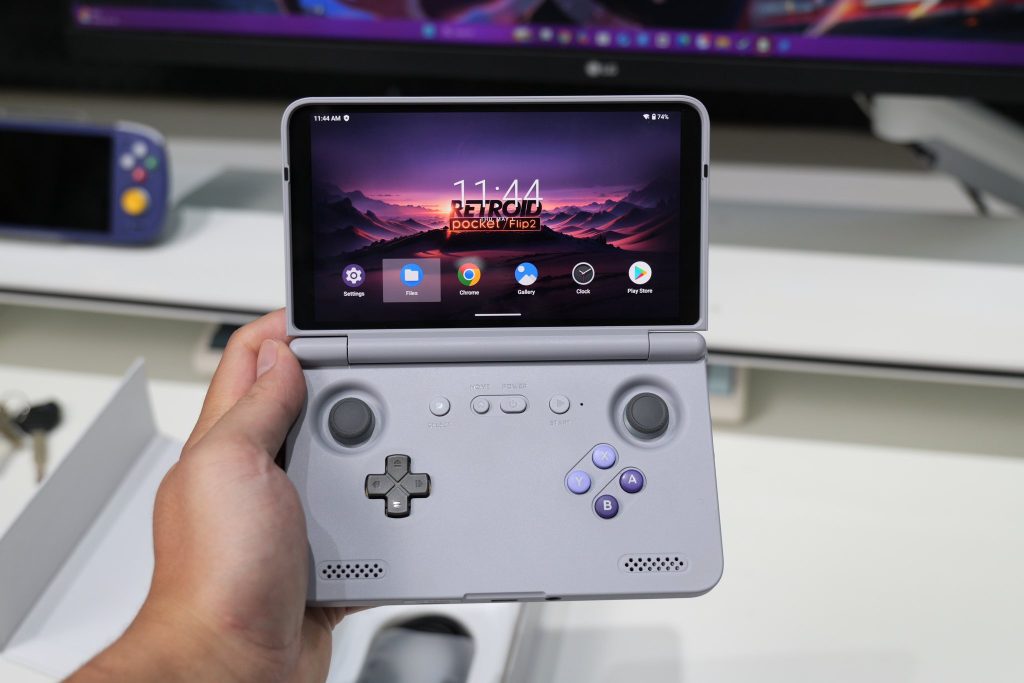
For years, the retro handheld market has been dominated by a singular, predictable silhouette: the classic “candy-bar” design. From ultra-budget pocket devices to monstrously powerful x86 handhelds, almost every manufacturer has opted for the standard screen-in-the-middle, controls-on-the-side layout. It is a functional, safe design, but it ignores one of the most beloved eras of portable gaming history—the clamshell.
When Nintendo dropped the Game Boy Advance SP in 2003, followed by the legendary Nintendo DS and 3DS families, they perfected the art of the “throw-and-go” console. You didn’t need a bulky hardshell case; you just snapped the device shut and shoved it into a crowded backpack or a jeans pocket.
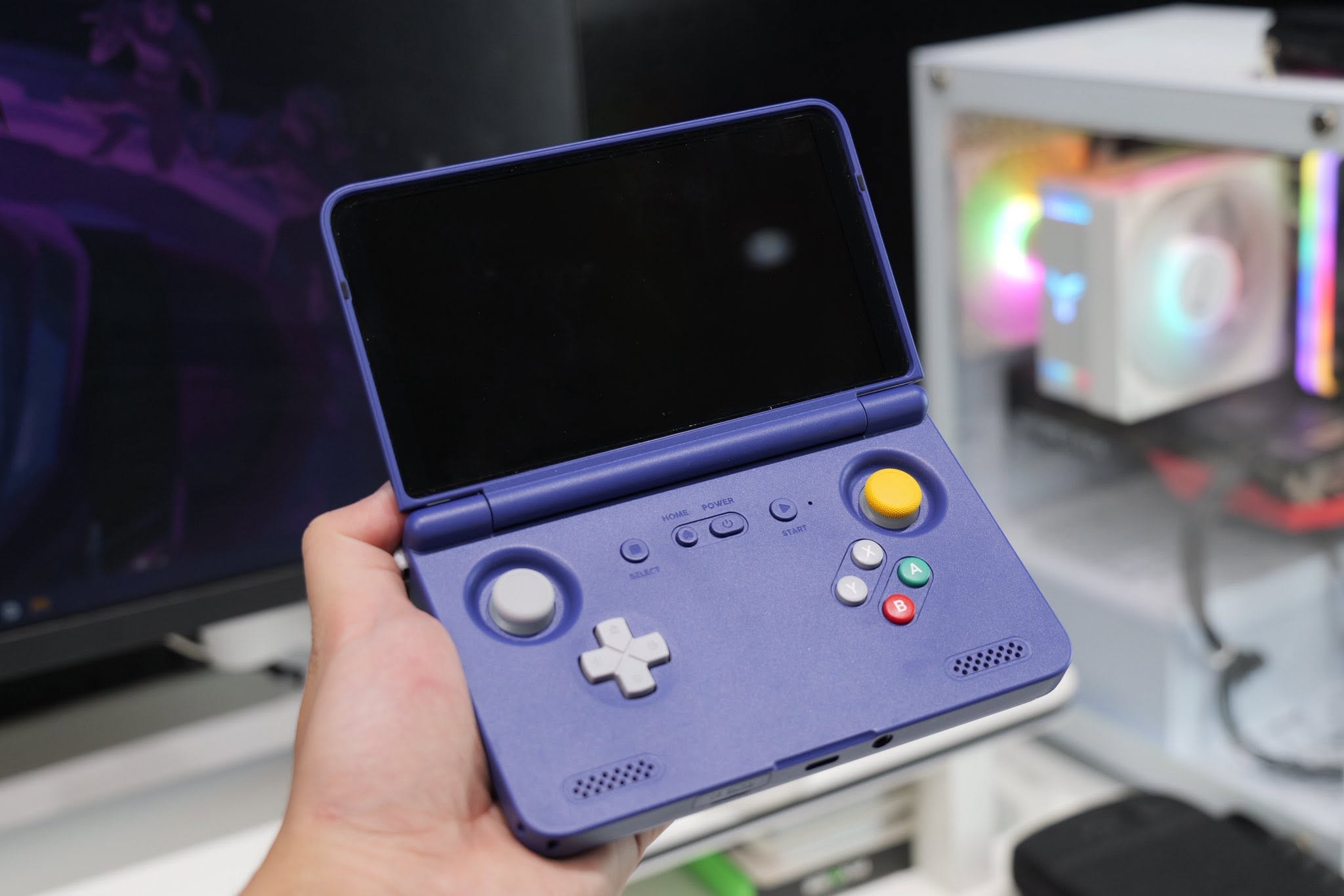
The Retroid Pocket Flip revives this iconic form factor with modern internal hardware, delivering an experience that appeals directly to retro purists and daily commuters alike. It stands out as a uniquely practical, highly protective, and deeply nostalgic device that reclaims the throne for clamshell engineering.
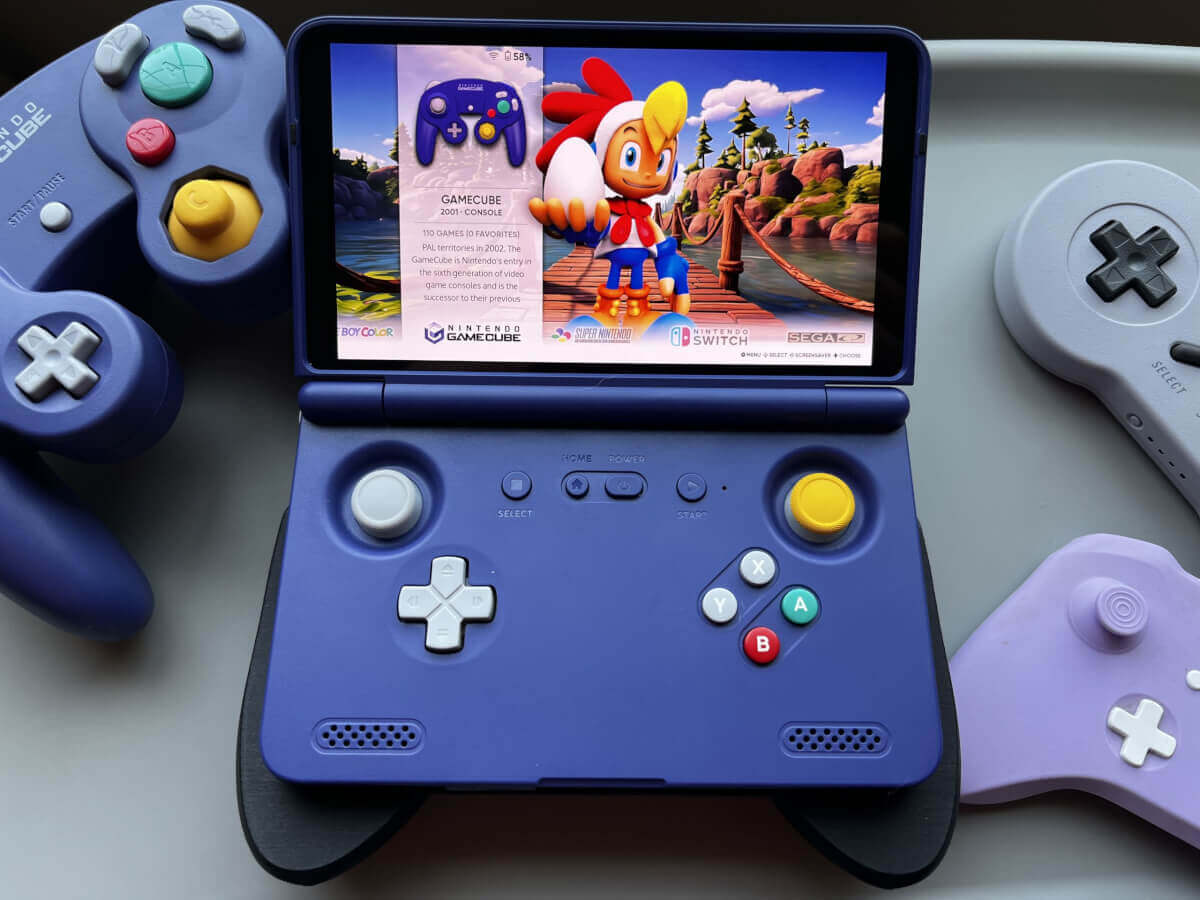
The Clamshell Revival: Ultimate Everyday Carry Protection
The absolute headline feature of the Retroid Pocket Flip is its physical design. In an era where smartphone screens are getting larger and more fragile, the Flip embraces the security of a folding chassis.
If you have ever owned a standard handheld like the Retroid Pocket 3+ or an Anbernic device, you know the daily anxiety of transporting it. Toss it into a bag alongside your keys, coins, or a laptop charger, and you risk deeply scratching the display or, worse, snagging and snapping one of the protruding analog sticks. To prevent this, most gamers buy thick, zippered carrying cases, which immediately defeats the purpose of having a “pocketable” device.
[Standard Handheld] + [Carrying Case] = Bulky, Slow to Access, Annoying to Pack
[Retroid Pocket Flip] = Snaps Shut, Self-Protecting, Pocket-Ready
The Flip completely rewrites this script:
- Absolute Screen Defense: When closed, the fragile 4.7-inch touch display is completely sealed away from the outside world. No dust, no keys, and no accidental impacts can touch it.
- Analog Stick Immunity: Because the controls are recessed and sheltered by the lid, the analog inputs are physically impossible to damage while transit.
- True Pocketability: Without the need for a protective travel sleeve, the Flip slides smoothly into a jacket pocket or backpack compartment. It is the ultimate everyday carry (EDC) device for subways, flights, or school lunches.
Beyond the sheer utility, there is a distinct, tactile satisfaction in using a clamshell. Opening the lid to wake the device from sleep mode and hearing that crisp, mechanical snap triggers an immediate wave of early-2000s gaming nostalgia.
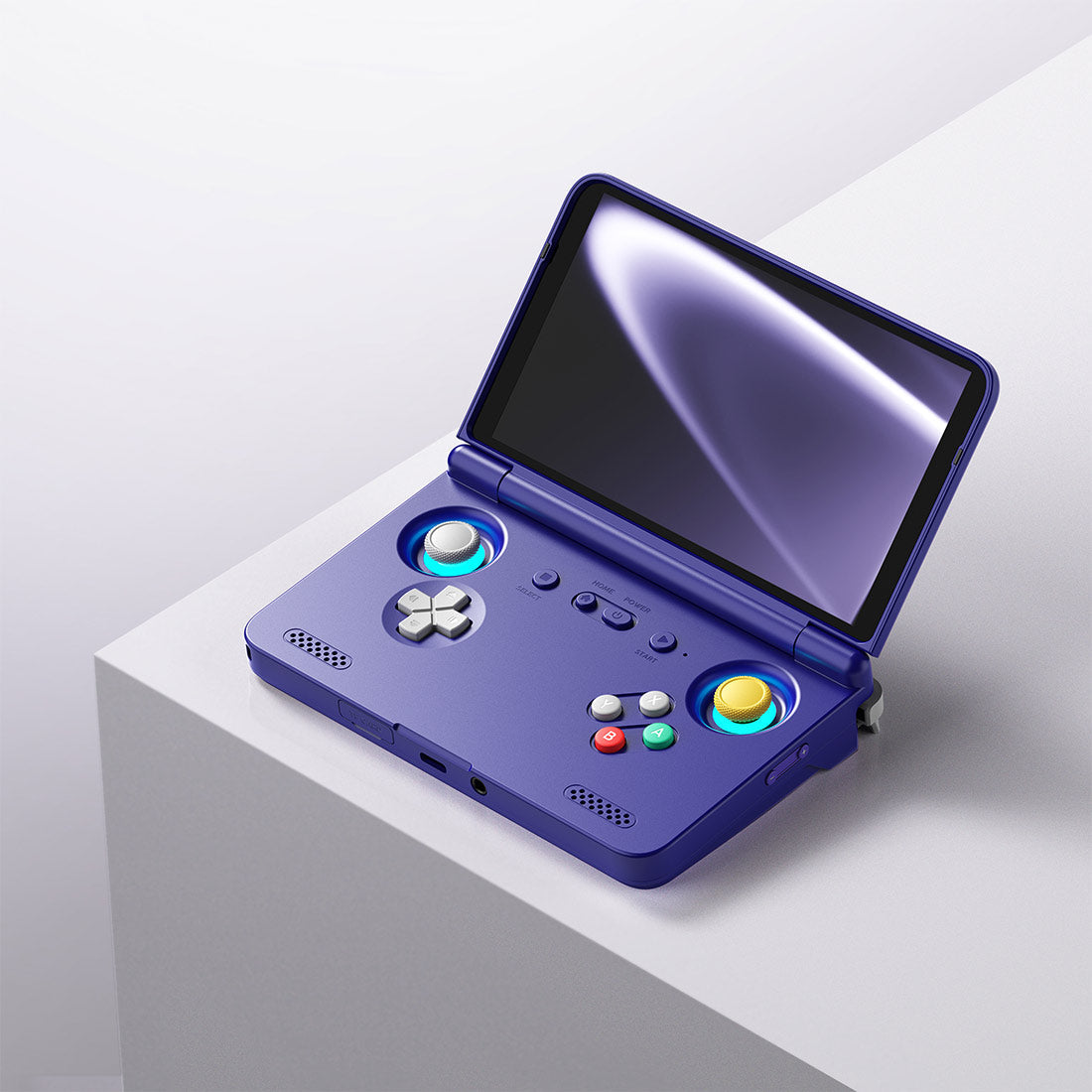
2. The Hinge Report: Long-Term Durability and Engineering
Whenever a company announces a folding electronic device, the community collectively holds its breath regarding one critical component: the hinge. Early production runs of the Flip faced intense scrutiny online, with early adopters worried about stress fractures or loose joints. Retroid quickly responded by reinforcing the plastic compound and internal metal structural rings.
Tested through thousands of open-and-close cycles, the refined hinge on the Retroid Pocket Flip proves itself to be remarkably robust.
Dual-Stage Locking Mechanics
The hinge operates with a premium, reassuring resistance. It doesn’t flop around when you tilt your wrists, nor is it so stiff that it requires two hands to pry open. Retroid engineered it with a smart dual-stage lock system:
- The Commute Angle (~135°): Perfect for playing while sitting on a train or bus, angling the screen perfectly to deflect overhead glare.
- The Flat Angle (180°): Completely flat, which is excellent if you are lying down or playing in bed.
The internal ribbon cables that route power and video data up to the display are heavily shielded, showing no signs of visual flickering, artifacting, or loosening over extended months of rugged daily use. It feels like a tank, built with the same structural integrity that made old Nintendo DS systems survive the chaotic environments of school playgrounds.
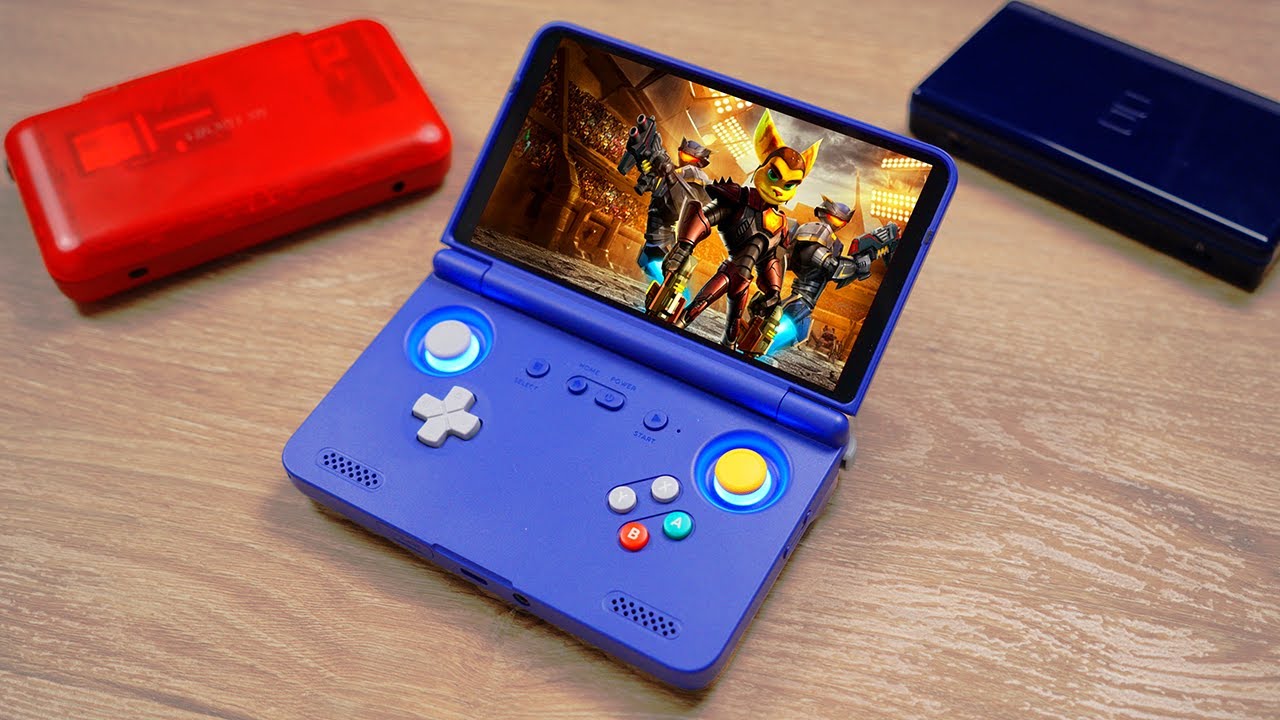
Sliders vs. Joysticks: A Different Kind of Control
To make a clamshell device fold completely flat without increasing the thickness of the shell to ridiculous proportions, traditional protruding analog joysticks had to go. In their place, Retroid implemented low-profile, flat Hall-effect sliders.
For gamers accustomed to the high travel of a PlayStation or Xbox controller, these sliders represent the biggest learning curve on the Flip. However, once you adjust to the horizontal sliding motion rather than a tilting pivot, the benefits become glaringly obvious.
The Hall-Effect Advantage
Because these sliders utilize magnetic Hall-effect sensors instead of traditional potentiometer contacts, they are inherently immune to stick drift. There are no physical parts rubbing together to wear down over time, ensuring that your deadzones remain perfectly circular and precise for years to come.
Genre-by-Genre Control Breakdown:
- D-Pad & Face Buttons: Positioned on the top half of the lower deck, the D-pad is clicky, responsive, and uses a crisp dome-switch layout. It is exceptional for fighting games and 2D platformers.
- Retro & RPGs (GBA, PS1, Pokémon): The sliders feel fantastic here. Navigating menus or moving characters in a 2.5D space feels intuitive and smooth.
- First-Person Shooters & Racing: This is where the sliders show their limits. Because the vertical travel is minimal, fine-tuning your aim in a shooter like Call of Duty: Mobile or executing micro-steering adjustments in a racing simulator takes a fair amount of practice.
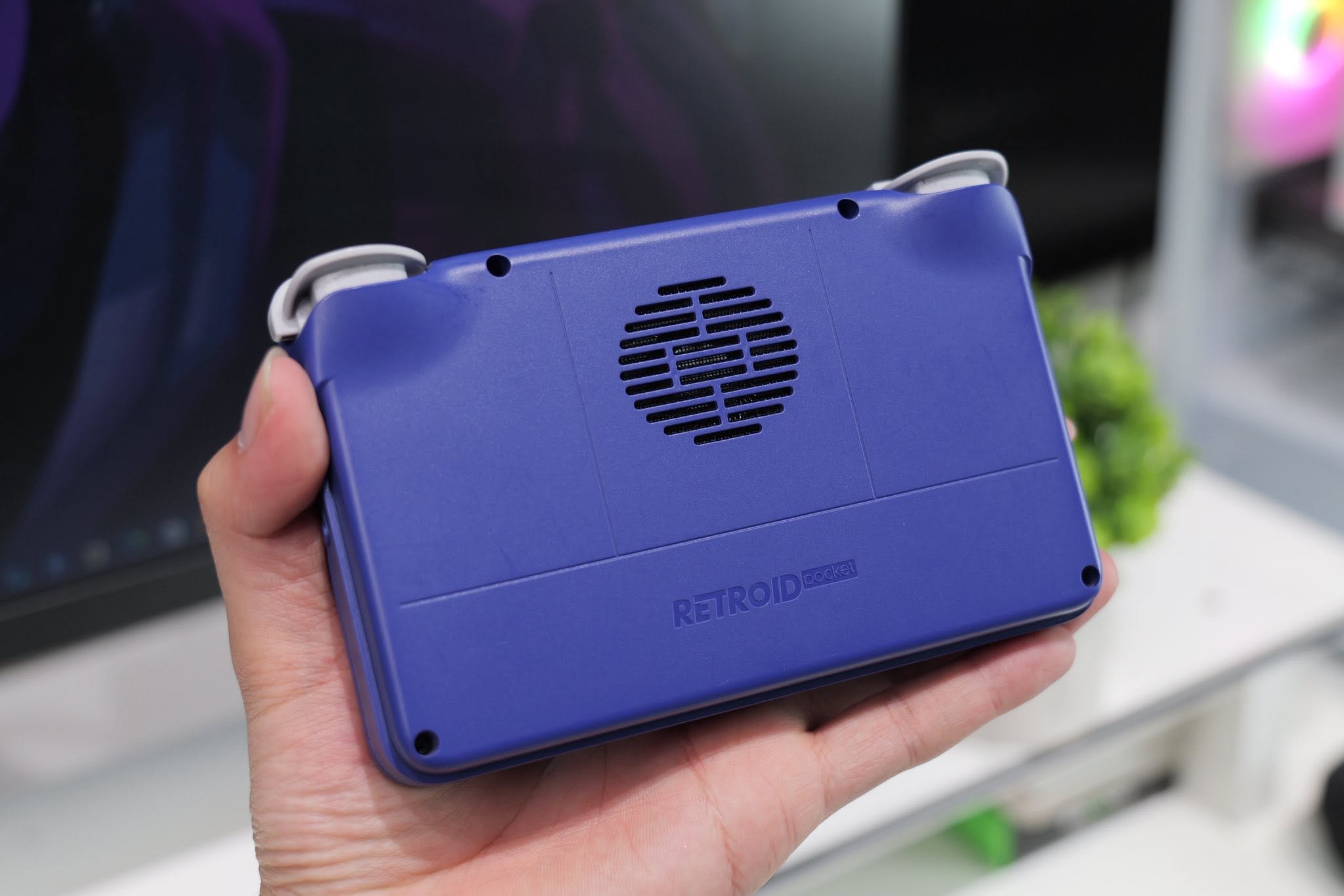
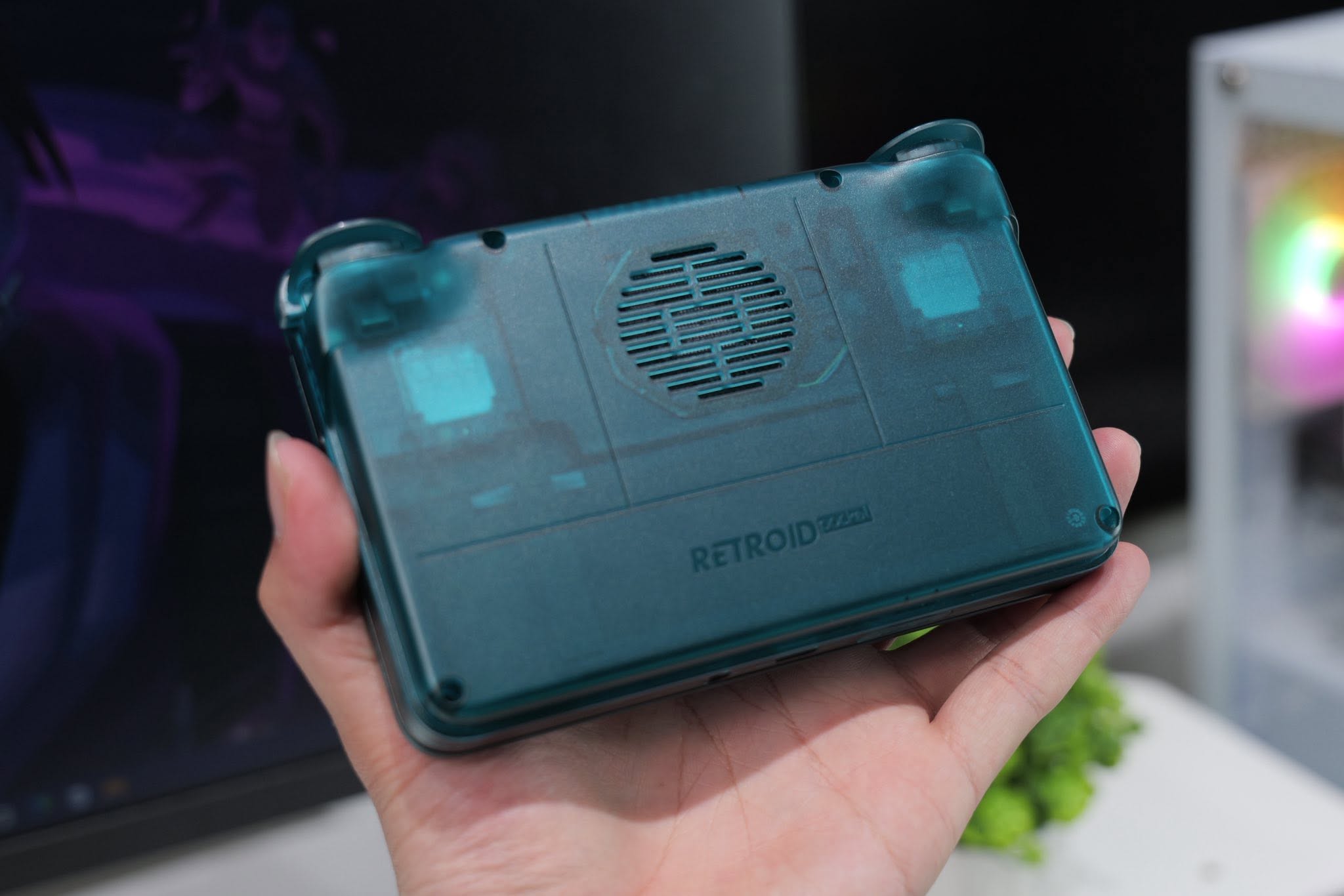
To sweeten the deal, Retroid also included analog triggers (L2/R2) on the back shoulders, which is a massive win for racing game emulation, alongside two programmable macro buttons nestled right next to the cooling vents.
Performance & Compatibility: The Sweet Spot of Value
Underneath its retro-inspired shell, the Retroid Pocket Flip is powered by an efficient octa-core processor paired with a Mali-G52 GPU and 4GB of LPDDR4x RAM. While it won’t compete with flagship Tier-1 handhelds capable of running high-end PC games, it hits the absolute sweet spot for emulating the golden eras of gaming.
8-Bit to 32-Bit Eras (The Perfection Tier)
Systems like the NES, SNES, Sega Genesis, and Game Boy Advance run flawlessly at maximum framerates while consuming minimal battery power. The 4.7-inch display, sports an incredibly bright 750-nit panel with an aspect ratio that scales retro pixels beautifully without turning them muddy.
PSP and Dreamcast (The Sweet Spot)
The Flip treats the Sony PSP and Sega Dreamcast catalogs like a walk in the park. You can comfortably boot up Grand Theft Auto: Liberty City Stories or Soulcalibur at a 3x or 4x rendering resolution, applying custom texture packs and widescreen hacks without encountering audio stuttering or frame drops. The wide display fits the PSP’s native 16:9 layout perfectly, making it look like an official, modernized Sony console.
PlayStation 2 & GameCube (The Boundary Tier)
This is where the Flip shows its pragmatic boundaries. Thanks to mature community emulators like AetherSX2 and Dolphin:
- Light/Medium Titles: Games like Kingdom Hearts, Final Fantasy X, Super Mario Sunshine, and The Legend of Zelda: The Wind Waker run at a stable 1x or 1.5x resolution, providing an excellent portable experience.
- Heavy Titles: Intense games like Shadow of the Colossus or God of War II will require frame-skipping, aggressive underclocking settings, or PAL (50Hz) ROMs to achieve playable speeds.
Specifications & Emulation Performance Matrix
| System / Console | Emulation Quality | Target Resolution | Battery Impact |
| GBA / SNES / Genesis | Flawless (100%) | Native / High Scale | Ultra-Low (8+ Hours) |
| PlayStation 1 (PS1) | Flawless (100%) | 2x – 3x Upscaled | Low (7+ Hours) |
| Sega Dreamcast | Excellent (99%) | 2x Upscaled | Moderate (5-6 Hours) |
| Sony PSP | Flawless (100%) | 3x – 4x Upscaled | Moderate (5-6 Hours) |
| Nintendo GameCube | Good (80%) | 1x Native / Mild Tweak | Heavy (4 Hours) |
| PlayStation 2 (PS2) | Acceptable (75%) | 1x Native / Needs Tweak | Heavy (3.5 – 4 Hours) |
Software Ecosystem: Clean Android Architecture
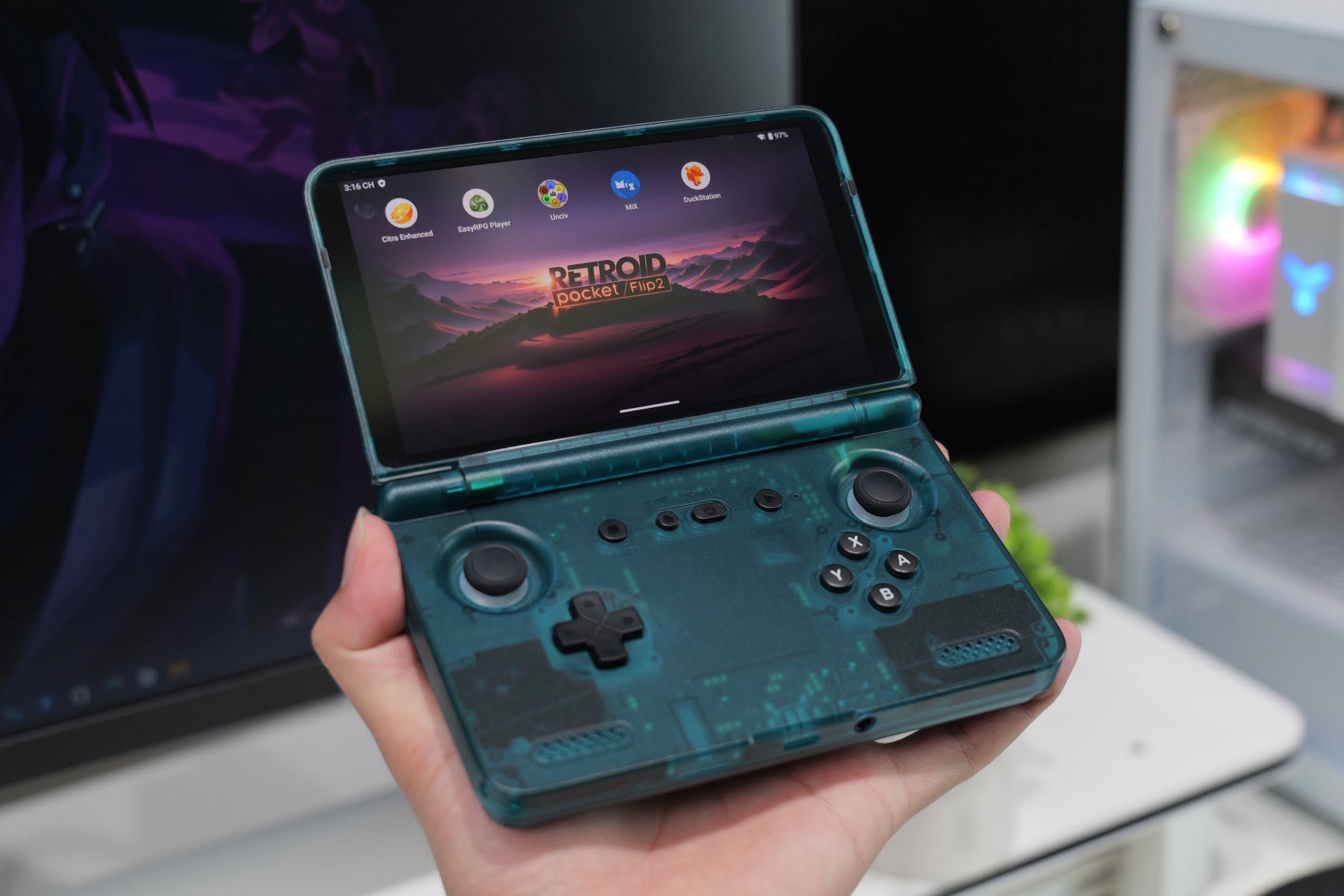
The Flip runs on an open Android architecture, giving you total freedom over how your handheld looks and operates. Out of the box, Retroid includes an optional, highly streamlined setup wizard that helps you install essential emulators and guides you into their proprietary Retroid Launcher.
The Retroid Launcher acts as a beautiful frontend, automatically scanning your MicroSD card, scraping official box art, and sorting your massive game collection into clean, console-specific tabs.
Furthermore, because it is powered by Android, the Flip isn’t just an emulation machine. It functions as an excellent cloud-streaming companion. If you have an active subscription to Xbox Game Pass, PlayStation Remote Play, or use Moonlight/GeForce Now to stream games from your home PC, the Flip acts as a flawless portable monitor. Streaming modern titles like Hi-Fi Rush or Cyberpunk 2077 over a 5GHz Wi-Fi connection directly to a pocketable clamshell feels like living in the future.
Verdict: Is the Retroid Pocket Flip Worth It?
The Retroid Pocket Flip is an exceptional triumph of specialized engineering over cookie-cutter design trends. It isn’t trying to beat bulkier steam-powered handhelds in a raw power benchmark. Instead, it solves a real, physical problem that plagues modern handheld gamers: worry-free portability.
By wrapping dependable mid-range hardware in a rigid, satisfying, self-protecting clamshell design, Retroid created a device that you can confidently throw into any bag, pocket, or glove compartment without a second thought. Combined with drift-proof Hall-effect sliders, an incredibly vibrant display, and deep emulation maturity, the Retroid Pocket Flip earns its title as the absolute best clamshell handheld for true on-the-go gaming. If you value physical durability, compact travel, and a heavy dose of classic folding nostalgia, this is the exact device your everyday carry setup is missing.